Friday, October 28, 2011
Me, Myself and I, Robot - From 9/29/11
In Sherry Turkle's first part of her book, "Alone Together," Turkle paints an interesting picture of the psychological shifts that are occurring in the way humans view and approach both interpersonal interactions and our interactions with machines (or robots.) In a very different tone than Jenkins in "Convergence Culture," Turkle mainly traces these changes through studies and observations in the way children interact/play with "interactive computer toys" (and eventually robots themselves) through the 80s, 90s and into the current day. Her main argument seems to be that the trends set by children (and perhaps the elderly) and slowly co-opted by adults, of how we interact with and understand artificial intelligences; tell us a lot about the ways we are coming to view human interaction as well. Namely, that an increasing willingness to "participate" in the interaction with AI can be seen as a psychological shift away from the messy, unpredictable, "dangerous" state of human affairs and into the arms of the safe, predictable, reliable robot. This is a very frustrating thought for someone like me, and I catch myself wondering how much truth there is in some of this analysis.
One concept that caught my eye in the first chapter was the idea of what constitutes "liveliness." Turkle cites a 1920s study which looked at an object's life status by "considering its physical movement." She then moves into the 1980s when, first confronted with computational objects, children shift their understanding of "liveliness" from physical movement to psychology. Machines were "alive enough" (a common phrase) if gave off the impression of "knowledge" or "thought." In the 90s, amongst the advent of simulation video games, this liveliness was more concerned with evolution- a changing, growing and adapting object was life-like. In the late 90s, this changed again and a certain "sociability" took hold. Turkle says: "...as criteria for life, everything pales in comparison to a robot's capacity to care."
This idea of a robot caring is what frustrates me. To belabor the obvious, robots don't "care." They don't "feel." They don't "understand." They don't have "emotions." According to Turkle, humans have started looking to robots for these things- but what they are truly getting are ILLUSIONS of these things. Turkle calls it the "performance" of caring, understanding, empathizing, etc. The disturbing thing is that, according to Turkle, humans are becoming increasingly willing to seek out and accept the performances of these things, in place of the real thing. The performance of caring gives us an outlet, but requires little to nothing of us- there is no REAL interaction required.
Turkle argues, and I will vehemently agree and focus on the idea that these limited interactions deprive us of the depth that human life is designed to have. While robots may have certain functional uses in the future, I have a hard time seeing them stepping into a motherly role, or a role where they are turned to in order to truly fulfill human emotional needs. They are not human. I am a firm believer in the value of interpersonal interaction, so it makes all the sense in the world to me, some of the things Turkle lists that are missing from companionship when it is made with a robot, and not a human. She goes so far as to say that there is a "psychological risk" in this "robotic moment." Turkle argues that when humans seek companionship with a robot, it boils down the "notion of companionship" all the way down to the basics of interaction. It doesn't even have to be interaction with feelings, as long as there is something we can interact with. No empathy, no understanding.
So why would humans turn to robots at any point rather than interact with another human? Turkle phrases it well when she says "to sustain relationships, one must accept others in their complexity. When we imagine a robot as a true companion, there is no need to do any of this work." She goes on to describe, in some of her case studies, the ways in which kids preferred their Furbies to real pets because they were cleaner and less complicated; or preferred a robot's interaction because it "seemed real" or was able to interact. Robots offer neatness; simplicity; maybe even order or safety in a world full of humans disappointing one another. Robots, and all sociable technology, promise what it/they cannot deliver. As Turkle says, they promise friendship but can only deliver a performance.
But it says something about humans and the way we are in this world, that we are so willingly complicit with this illusion. Turkle describes a lot of ways in which we willingly fool ourselves into making robots (or any machine) more than they are/is. She also describes any number of ways in which robot interaction is illegitimate, particularly in comparison to human interaction. While Turkle describes these changes to preferring more safety and order in our companionships, and settling for cheap imitations- it seems as though it is just one direction into which the world is going. However, the importance of recognizing these things is not to see just what it is that drives us further into being "alone, together" - that we fear being hurt, humiliated, let down, etc. It is also important to see that it is worth the risk of all of those things, to be open to true, human interaction.
Images:
I, Robot
Skynet Becomes Self Aware
Henry Jenkins Photoshop and Conclusion - From 9/22/11
Chapter Six: Photoshop for Democracy
In his final chapter, Henry Jenkins takes a look at the ways in which pop culture - and convergence culture by proxy- could impact and is impacting politics. Jenkins describes all of the topics covered in the book as "serious fun" - we are not just studying trivial pop culture or media; but ways in which all of these things interact to shape the ways in which we live our lives. Jenkins takes the next step in this progression- from knowledge communities to fan participation, all the way to its applicability to politics. Jenkins mentions first the impact that pop culture had on voters in the 2004 election, as evidence of the potential that studying pop culture and convergence culture can have on more than just our media consumption.
One thing that Jenkins mentions early on in the chapter is a "revolutionary potential" that comes from the development of communication technologies such as we have today- that would enable "grassroots communication." Information travels faster and is more available in this environment. As Jenkins points out, "innovative and even revolutionary ideas" are accessed by more and more of the population thanks to the internet. In talking about these points, Jenkins refers often to Paul Trippi- the campaign manager for Howard Dean's famous internet campaign. Unfortunately, the downside to the widespread availability of information is also further scrutiny for public speakers.
That is how this >>
Turns into this>>>>>
One minute, the internet was gaining Dean enough of a following to fund his campaign- and the next, it was turning against him and bowing him out of the race.
More than the simple internet though, Jenkins talks about the wide variety of ways politicians have started capitalizing on popular culture as a way to get a message out- the approaches spread to concerts, movies, and even games (Howard Dean's game was the best example.) At the same time, the public has begun participating in politics in a different way too. Jenkins mentions the advent of political blogging as a way for politician and citizen alike to get ideas out into the public eye. This, like many other methods is a grassroots oriented activity that can still have a widespread impact and be co-opted by the mainstream.
Specific to citizens themselves, Jenkins mentions various ways that the "consumer" is changing how he or she behaves in the political process: between online community gameplay, participation in knowledge communities, blogging, and spreading politically-grounded Photoshop images on the internet- the average voter is changing as well. One specific thing Jenkins looked at was an online gaming community called "Alphaville" which ran its own presidential elections back in 2004. This game gave everyday citizens a chance to encounter the political process in a very real and invested way. These new ways of engaging voters is one of the big hopes for a Democratic convergence culture- but it has obviously a ways to go yet.
One final thing that Jenkins looks at is the relations of our pop-culture knowledge communities to the politicalstalemate condition in the United States today. He mentions that knowledge communities are formed based on cultural interests and knowledge- whereas political affiliation is formed based on... well, political affiliation and ideology. He investigates the possibility that a form of knowledge community might be a tool in uniting such an ideologically divided nation- that we are willing to let go of our ideological differences in lieu of pop culture might suggest that there would be a way to get around our differences politically, on the basis of working together. As Jenkins put it in conclusion: "We need to create a context where we listen and learn from one another. We need to deliberate together."
Conclusion:
In his conclusion, Jenkins once again sums up what convergence culture is all about- not a change in technology or media platform; but a cultural change, or a "paradigm shift" toward media that flows across multiple platforms and channels and interaction amongst different forms of media. While he does say that this move is largely about turning out a profit, Jenkins does go on to mention the way convergence culture is creating new ways of producer-consumer (and consumer-consumer) interaction. It is changing the ways in which we interact with one another and with the media that we consume (and now, create!) Jenkins argues that we are developing important skills- he calls them participatory skills- first through pop culture but that it has the potential to spill over into the way we view politics, education, or any other number of things. It's a cultural change that we are just at the beginning of; as Jenkins says- "convergence culture is the future, but it is taking shape now."
In his final chapter, Henry Jenkins takes a look at the ways in which pop culture - and convergence culture by proxy- could impact and is impacting politics. Jenkins describes all of the topics covered in the book as "serious fun" - we are not just studying trivial pop culture or media; but ways in which all of these things interact to shape the ways in which we live our lives. Jenkins takes the next step in this progression- from knowledge communities to fan participation, all the way to its applicability to politics. Jenkins mentions first the impact that pop culture had on voters in the 2004 election, as evidence of the potential that studying pop culture and convergence culture can have on more than just our media consumption.
One thing that Jenkins mentions early on in the chapter is a "revolutionary potential" that comes from the development of communication technologies such as we have today- that would enable "grassroots communication." Information travels faster and is more available in this environment. As Jenkins points out, "innovative and even revolutionary ideas" are accessed by more and more of the population thanks to the internet. In talking about these points, Jenkins refers often to Paul Trippi- the campaign manager for Howard Dean's famous internet campaign. Unfortunately, the downside to the widespread availability of information is also further scrutiny for public speakers.
That is how this >>
Turns into this>>>>>
One minute, the internet was gaining Dean enough of a following to fund his campaign- and the next, it was turning against him and bowing him out of the race.
More than the simple internet though, Jenkins talks about the wide variety of ways politicians have started capitalizing on popular culture as a way to get a message out- the approaches spread to concerts, movies, and even games (Howard Dean's game was the best example.) At the same time, the public has begun participating in politics in a different way too. Jenkins mentions the advent of political blogging as a way for politician and citizen alike to get ideas out into the public eye. This, like many other methods is a grassroots oriented activity that can still have a widespread impact and be co-opted by the mainstream.
Specific to citizens themselves, Jenkins mentions various ways that the "consumer" is changing how he or she behaves in the political process: between online community gameplay, participation in knowledge communities, blogging, and spreading politically-grounded Photoshop images on the internet- the average voter is changing as well. One specific thing Jenkins looked at was an online gaming community called "Alphaville" which ran its own presidential elections back in 2004. This game gave everyday citizens a chance to encounter the political process in a very real and invested way. These new ways of engaging voters is one of the big hopes for a Democratic convergence culture- but it has obviously a ways to go yet.
One final thing that Jenkins looks at is the relations of our pop-culture knowledge communities to the political
Conclusion:
In his conclusion, Jenkins once again sums up what convergence culture is all about- not a change in technology or media platform; but a cultural change, or a "paradigm shift" toward media that flows across multiple platforms and channels and interaction amongst different forms of media. While he does say that this move is largely about turning out a profit, Jenkins does go on to mention the way convergence culture is creating new ways of producer-consumer (and consumer-consumer) interaction. It is changing the ways in which we interact with one another and with the media that we consume (and now, create!) Jenkins argues that we are developing important skills- he calls them participatory skills- first through pop culture but that it has the potential to spill over into the way we view politics, education, or any other number of things. It's a cultural change that we are just at the beginning of; as Jenkins says- "convergence culture is the future, but it is taking shape now."
Thursday, October 27, 2011
Questions for Bonnie Nardi and Response Part Three
My questions for the author of "My Life as a Night Elf Priest":
1) You mention the benefits of doing an ethnographic study of a culture like World of Warcraft because you can become fully immersed in that culture. What was the biggest challenge (if any) in reconciling your empirical researching perspective with your investment in the game/world?
2) Why do you think an aesthetic activity such as WoW (or gaming generally) gets a negative stigma, while other aesthetic activities that bring about a similar level of fanaticism are viewed as the "norm"?
3) Finally, another author we have read in this class- Sherry Turkle- goes to great lengths to describe the ways that our "online life" is changing the way we interact in offline life (or the way we look at or think about interpersonal interaction.) Do you see any ways that a community or culture such as WoW is impacting this?
Part Three: Cultural Logics of World of Warcraft
In the final part of her book, Nardi takes a look at various cultural elements of World of Warcraft from a few different angles:
Addiction:
Nardi spends a significant amount of space on the topic of "addiction" as it relates to WoW and gaming generally. She refers back to Dewey's definitions of active aesthetic activity- and mentions the remaining piece; that for an activity to be aesthetic, it must be done in balance and proportion. As Nardi says: "the passion that animates aesthetic activity contains within itself a dangerous seed; such passion can transmogrify to an extreme state in which it "overwhelms" us." She is clear from the outset to assert the idea that the game itself is not the reason for any "addiction" - millions of people are able to play it without becoming addicted. So, in spite of the mass media's portrayal of a game like World of Warcraft- the game itself is not addicting in essence.
Nardi eventually stops using the word addiction quite as much and begins to investigate the term "problematic use," which basically means that it interferes with one's everyday life in some way. There are many kinds of problematic use- basically anything that could interfere with one's responsibilities and every day activities could be used problematically. However, not all of those things (sports in particular) gets the negative stigma attached to them like WoW and gaming do. A big part of this reason is that the media responds to things that are seen or defined as "a threat to societal values and interests." College sports fit with American societal values, so no one calls it "problematic use" to spend thousands of dollars on a parking spot 7 days a year. In reality though, with gaming and with just about anything, Nardi makes the point that problematic use usually comes into the equation with the user, not with the game/item. "Problem players bring their problems to the game." The issues that are displayed in problematic use of the game are simply symptoms of something bigger.
While Nardi does not offer a cure or answer for video game addiction, in this chapter she does call into question exactly what addiction looks like, and what role video games might truly play in society.
She then looks at gamer participation through two different angles: theorycraft and mods. Theorycraft is, in essence, gamer participation in researching game mechanics in order to figure out and determine the best way to do various things like distribute talent points or equip various types of armor. Mods are actually software modules that players might add to the game- they essentially add new functionality; new options for gameplay. The thing that stood out about theorycraft was the analytical effort and endeavors it would take to track all the different game mechanics and map them out. Not dissimilar to Jenkins' knowledge cultures and collective intelligence, one who participates in theorycraft goes deeper into the game, likely with the help of others. Mods, on the other hand, provides gamers an opportunity to mix things up in the game, but more importantly to also express a certain sense of individuality inside of the game. These two ways of gamer involvement are actually done predominately outside of the actual game play, and the sheer amount of time and effort it would take to do either of these shows just how deep the World of Warcraft experience goes.
Finally, over the last couple of chapters Nardi talks about both gender and nationality as gaming factors. From the sounds of it, she had a very positive experience as a female gamer; but she was definitely participating in a male's world. She observed that some social boundaries that might not be crossed in normal speech were fair game in the midst of game play- this, mostly by males. Males did not hold back just because a female was present in their ranks, on the other hand they might pay the female a special sort of attention. While the gaming atmosphere was definitely controlled by male dominance, Nardi really sounded like she enjoyed the actual aesthetic value of the game as a female. The graphics, in particular she found to be aesthetically balanced, and not male-dominated for a change.
Lastly, as Nardi conducted the Chinese portion of her research, she found many many similarities between American gamers and Chinese gamers. The one major difference she observed was the environment in which Chinese gamers preferred to play. Americans would typically choose to play from the comfort of their home, but Chinese actually seemed to desire the environment of playing in local Internet Cafes. Nardi found that it was about the gaming atmosphere just as much as the logistics of having an available computer and internet service.
1) You mention the benefits of doing an ethnographic study of a culture like World of Warcraft because you can become fully immersed in that culture. What was the biggest challenge (if any) in reconciling your empirical researching perspective with your investment in the game/world?
2) Why do you think an aesthetic activity such as WoW (or gaming generally) gets a negative stigma, while other aesthetic activities that bring about a similar level of fanaticism are viewed as the "norm"?
3) Finally, another author we have read in this class- Sherry Turkle- goes to great lengths to describe the ways that our "online life" is changing the way we interact in offline life (or the way we look at or think about interpersonal interaction.) Do you see any ways that a community or culture such as WoW is impacting this?
Part Three: Cultural Logics of World of Warcraft
In the final part of her book, Nardi takes a look at various cultural elements of World of Warcraft from a few different angles:
Addiction:
Nardi spends a significant amount of space on the topic of "addiction" as it relates to WoW and gaming generally. She refers back to Dewey's definitions of active aesthetic activity- and mentions the remaining piece; that for an activity to be aesthetic, it must be done in balance and proportion. As Nardi says: "the passion that animates aesthetic activity contains within itself a dangerous seed; such passion can transmogrify to an extreme state in which it "overwhelms" us." She is clear from the outset to assert the idea that the game itself is not the reason for any "addiction" - millions of people are able to play it without becoming addicted. So, in spite of the mass media's portrayal of a game like World of Warcraft- the game itself is not addicting in essence.
Nardi eventually stops using the word addiction quite as much and begins to investigate the term "problematic use," which basically means that it interferes with one's everyday life in some way. There are many kinds of problematic use- basically anything that could interfere with one's responsibilities and every day activities could be used problematically. However, not all of those things (sports in particular) gets the negative stigma attached to them like WoW and gaming do. A big part of this reason is that the media responds to things that are seen or defined as "a threat to societal values and interests." College sports fit with American societal values, so no one calls it "problematic use" to spend thousands of dollars on a parking spot 7 days a year. In reality though, with gaming and with just about anything, Nardi makes the point that problematic use usually comes into the equation with the user, not with the game/item. "Problem players bring their problems to the game." The issues that are displayed in problematic use of the game are simply symptoms of something bigger.
While Nardi does not offer a cure or answer for video game addiction, in this chapter she does call into question exactly what addiction looks like, and what role video games might truly play in society.
She then looks at gamer participation through two different angles: theorycraft and mods. Theorycraft is, in essence, gamer participation in researching game mechanics in order to figure out and determine the best way to do various things like distribute talent points or equip various types of armor. Mods are actually software modules that players might add to the game- they essentially add new functionality; new options for gameplay. The thing that stood out about theorycraft was the analytical effort and endeavors it would take to track all the different game mechanics and map them out. Not dissimilar to Jenkins' knowledge cultures and collective intelligence, one who participates in theorycraft goes deeper into the game, likely with the help of others. Mods, on the other hand, provides gamers an opportunity to mix things up in the game, but more importantly to also express a certain sense of individuality inside of the game. These two ways of gamer involvement are actually done predominately outside of the actual game play, and the sheer amount of time and effort it would take to do either of these shows just how deep the World of Warcraft experience goes.
Finally, over the last couple of chapters Nardi talks about both gender and nationality as gaming factors. From the sounds of it, she had a very positive experience as a female gamer; but she was definitely participating in a male's world. She observed that some social boundaries that might not be crossed in normal speech were fair game in the midst of game play- this, mostly by males. Males did not hold back just because a female was present in their ranks, on the other hand they might pay the female a special sort of attention. While the gaming atmosphere was definitely controlled by male dominance, Nardi really sounded like she enjoyed the actual aesthetic value of the game as a female. The graphics, in particular she found to be aesthetically balanced, and not male-dominated for a change.
Lastly, as Nardi conducted the Chinese portion of her research, she found many many similarities between American gamers and Chinese gamers. The one major difference she observed was the environment in which Chinese gamers preferred to play. Americans would typically choose to play from the comfort of their home, but Chinese actually seemed to desire the environment of playing in local Internet Cafes. Nardi found that it was about the gaming atmosphere just as much as the logistics of having an available computer and internet service.
Aca-Fan Fiction: The World Through the Eyes of Eloj- the Blood Elf Hunter
![]() |
| I've got my whole life ahead of me!! |
I'm full of eager anticipation for the journey that lies ahead. I cannot wait to learn the ins and outs of what it takes to be a successful hunter. I sincerely hope that I will represent my race well in the days to come. Today was a relatively tame initiation: I enlisted in just a couple of missions around Sunstrider Isle; leveled up once; and got a new weapon! Here I am, at the beginning of an optimistic journey:
![]() |
| Leveling Up is probably my favorite thing ever! |
Today, I joined forces with a few friends to take down a few tasks: Xamari, Licha and Maurician all were worthy allies in our day's adventures. Licha showed us how to get from Sunstrider Isle to Silvermoon City- and from there we were able to orb to Undercity, then we walked to Brill where we participated in some special "Hallows End" festivities. Xamari, Maurician and I did not have the "elf-power" to extinguish the fires of the Horseman today; but we did help each other on a couple of other quests. One light-hearted moment from the day was when I put a Halloween hand on Xamari and turned her into a skeleton- she didn't know what hit her! In my bag of treats, I also got some handy toothpicks, and I got the "sparkling smile" achievement- an award I have been waiting to get for quite some time... On the down side, while we were out on a mission- I died for the first time! I must say, there is nothing quite so humiliating as running as fast as you can from the graveyard back to the battlefield while you know that your friends are fighting for their lives, and for the sake of the mission. I learned from this experience, and vowed not to let it happen again (not to take for granted the foes I will face along the way of my journey.) Overall, and apart from dying, it was a successful day- I leveled up a few more times, some of us ended up with pumpkin heads, some with skeletons for bodies; but overall I think the important thing that we learned was the importance of working together to achieve a task... You can do a lot in this world on your own, but when you have the help and support of others- the sky is the limit!!
Day Three:
![]() |
| Just doing what I do. |
Day Four:
![]() |
| Would YOU feel clean swimming in THIS?!? |
Day Five:
Now that I've rested in the Court of the Sun, I finally feel energized and ready to take on some tasks! First, I will head into Fastriders' Square and meet my Hunter Trainer. I know, my readers might be thinking- what kind of training does such a mighty hunter as yourself require? This is a question I absolutely cannot afford to ask! Part of being a mighty hunter is always staying hungry, always improving. My prey will grow and adapt, and so must I! Does a great athlete stop training the day he becomes "the best"? No! Neither then, shall I stop my training! In addition to this training, a great hunter requires the best equipment available- so I bought myself a new bow; a Hornwood Recurve Bow, to be exact. The difference is palpable, and I can go forth with a renewed confidence in my abilities. Those who stand in my way barely stand a chance! After this substantial equipping, I decided to take on a task... Unfortunately, it was one that did not require a weapon. I was given the opportunity to go speak to some Orc orphan children- to be a good influence on them I suppose, a good example, a role model. I went and told them stories of the hunt, stories of the road and of meeting strange travelers in far off lands. I think it went well. Who knows? One day one of those children might become a mighty hunter or huntress himself or herself. I learned another important lesson from this experience: often times, the tongue is quicker and more potent than the bow.
Day Six:
![]() |
| Just doing my part to keep the home fires 'a burnin! |
![]() |
| Friends... how many of us have them? |
Next, I bumped into my friend Maurician in the Living Wood, and we chatted for a little while. You might be wondering what two blood elves talk about in casual conversation.... The answer is that we never have casual conversation, only awesome conversation! On a serious note, it takes a few days of wandering out in the wilderness on a good old hunt to really appreciate how lucky one is to have the friends he has... This life is so much more enjoyable because I have people to share it with!
![]() |
| Xamari and Eloj preparing to attack a quest together! |
And speaking of people to share my life with, after bumping into Maurician I actually traveled to a new place- the Ghost Lands- to meet up with Xamari! It's great to have a familiar face by your side when you are far from home, and this was no exception. Xamari got me through some difficult quests in this strange new land- full of beasts I had yet to encounter back on my home turf. While some of the beasts were frightening, and the novelty of it all was intimidating, I must say that overall it was exhilerating to begin to grasp the sheer volumes of creatures in this world that I have yet to encounter. It makes me want to get out more! So my excursion with Xamari was relatively fruitful, and by the end of it I was ready to call it a day- a very action-packed day, at that!
Day Seven:
![]() |
| Flying>Walking... x1000000 |
The days are going by more quickly now. I think partially it is because of the sheer volume of the quests I am taking on; but also because I am growing more accustomed to life as a hunter. The days seem to go faster, the higher level I become! Anyhow, today I had the opportunity to go to Silvermoon City on a quest... However, instead of walking from the ghost lands- I was able to fly there! I must say, now that I know I am able to fly back and forth in between various places I have to believe that my productivity is going to increase substantially!
Day Eight:
Today's entry is not going to be about me at all... I have done plenty of journaling about my thoughts, but today's journal I will dedicate to my devoted pet... Dragonhawk! I have talked previously about the value of loyal friends- that having those friends is in large part what makes this life enjoyable. Well, I have found the same thing to be true for my beloved Dragonhawk. Perhaps even moreso than the most loyal of friends, Dragonhawk is the most loyal pet I have ever seen or heard tale of. For one thing, he follows me everywhere- even when I don't ask him to do so. I can be the most neglectful owner in the world- preoccupied with my hunting duties, no doubt- and even then, everytime I turn around, he is there! When I am in the line of fire, it is Dragonhawk who throws himself in front of me and takes the brunt of the damage, while I finish off the kill. Honestly, he even helps me in my hunting and killing beasts more than I care to admit... He is a powerful, beautiful, self-sacrificial animal and I am lucky to have him with me. There is something about an Elf and his best friend- being on the road, on the hunt, and on an adventure together forges a bond even stronger than it normally would be. Put simply, this journey would not be complete without my Dragonhawk!!
Day Nine:
Today I will be talking about my hunting techniques and approaches. My main strength as a hunter is with range weaponry, so I typically stay at a distance from my prey and shoot with my bow. While this may seem simplistic, there are a few different strategies I have taken that seem to bring about success in the majority of cases... The first thing I learned when hunting is not to fire shots into a crowd. When you fire at a beast, it is prone to turn and run straight at you- however when you fire at multiple beasts, they ALL are prone to turn and run at you. This is a big problem. I'm not as strong with melee (or close range) attacks, so ideally I don't want a beast to have time to reach me. I can fight off one of them though; it's a group attack that could (and has) prove(n) fatal. Another thing to take into consideration is that an archer has a blind side- I usually like to shoot at beasts with my back up against a nice hillside or rock formation... This way I know that another animal isn't sneaking up on me as I am focused on my prey.
These considerations are especially important when considering how I use my faithful pet, Dragonhawk. He usually acts as a buffer between me and my prey- to keep the beast from charging at me. So in consideration of all of the things above, he is more useful when I am only attacking one beast at a time, and when I know another beast is not going to sneak up on me while my faithful protector is away.
Specific to my talents, there is even a bit more strategy that goes into hunting. I developed the skills to shoot a variety of types of shots with my bow- each having a different effect.... The ordering of these shots can make the difference between perishing or surviving (for both myself, Dragonhawk, and the beast.) The first technique I use is a hunter-technique that marks out a specific target... This increases the amount of damage that I am able to do with a ranged weapon. Next, I command Dragonhawk to attack the target. I wait for him to start causing damage, so that he has the attention of the creature (and I have never seen a creature that could do significant damage to my faithful friend.) This way, when I begin shooting at the beast, it won't immediately start charging me- it will continue parrying with Dragonhawk. As for the ordering of my shots: first, I fire a shot that is designed to throw the beast into a daze and significantly slow it down. Next, I might fire a shot that either disables the beast from attacking (temporarily) or I might shoot a shot that takes off damage over time (this is what I would use for bigger beasts and monsters.) Finally, I would repeatedly fire my standard bow shot, repeatedly. If the beast starts getting close- depending on its size, I might choose to melee with it and completely slaughter the poor thing, or if it is a bigger creature and more intimidating, I would probably try to fire my "slow-down" shot once again, and get some distance so that I can continue to use my ranged weapon.
These things may seem like trivial details, but I think the average elf would be surprised at how useful it is. For any aspiring hunters out there, I would recommend- if not this strategy, at the very least having a plan of action when you embark on a hunt. You need to know how you are going to attack, how you are going to position yourself, and any strategies that you might use ahead of time- because in the heat of the moment, it is easy to completely panic and forget what you are doing.
Day Ten:
Today was a day of setbacks... I have been exploring the Ghostlands, picking up quests and trying to level up as much as I can. I have realized that there are bigger fish in the sea, and it is time to step up to the plate and face some of these challenges. However, I am realizing that this is going to take some hard work; some blood and some sweat. Today, I seemingly died over and over (and over, and over again.) I can't think of anything more humiliating than running back from the graveyard (I can't resurrect in the Graveyard now that I am above level 10) to the exact same spot, only to get killed again. It is very frustrating! However, the only thing that is to be done is to persevere through it, and come out stronger for my struggles. That is the approach I am choosing to take, and I am just anxiously anticipating the day that these monsters cower in fear of me!
Day Eleven:
Today I participated in more Hallows End activities. This time, I had some help and we FINALLY extinguished the fires and defeated the Horseman! I became dubbed the "Savior of Hallows End," and got a candy that made me grow super-sized and super-strong! After such a frustrating day yesterday, it was very refreshing to take a break and have some light-hearted, yet productive fun. Just what I needed on a day like today!
Day Twelve:
Back to business today... I'm getting close to level 20- so close I can taste it! It's time for one or two final, hard pushes and I should be there! First though, I went through an area where I was encountering a very significant amount of Spindling Spiders- and as brave as I know that I am, and as valiant and strong; I still can't help but back away as quickly as possible from those disgusting creatures! Typically, I take joy in the hunt- in part out of respect for the creatures I am hunting. I feel no such joy in killing this spiders- only disgust.
Once I got through the spiders, I completed a couple of quests to get to level 19, and decided to head back to Silvermoon City- I need to begin my journey to Orgrimmar to meet up with my friends and classmates I will be battling with tonight. I can only hope that along the way, I will level up to level 20!
However, in getting to Silvermoon City, I had some time to spare and still needed about a half of a level to get up to level 20. Additionally, I grew bored of walking around the safety of the city walls... I'm used to beasts jumping out at me around every turn, so I decided to go out for one last hunt! I spent some time exploring the surrounding area, checking out some places I've never been before and got a good deal of experience points. Finally, I had time for one last quest- and it did just the trick. I leveled up to Level 20!!
![]() |
| I sincerely hope there is no led in this Zeppelin! |
Now, it's off to Orgrimmar, by way of Undercity, by way of Silvermoon City. The journey was long and hard, but I finally made it onto the Zeppelin to Orgrimmar and it was smooth sailing!
Finally, in Orgrimmar, I made my way to the Valley of Wisdom to wait for my friends. I feel a sense of anticipation for tonight's action; I am excited to see what the night holds. As I sit and wait, I reflect on the journey- now that I am at it's end. In reality, this end is just the beginning of my greater journey- now that I am at level 20, a whole new world awaits me- full of new challenges, new opportunities to learn and grow- and most importantly, new adventures. I feel like I can truly say that I have grown from this experience. I've developed friendships, I've learned about hunting, and I've learned about myself. I have become stronger, smarter and probably most of all more perseverant from the journey to Level 20, and to Orgrimmar.
I look forward to what lies ahead.
-Blood Elf Hunter for life!
Thursday, October 20, 2011
Nardi Part Two: Active Aesthetic Experience
In the second part of her book, Bonnie Nardi looks at what makes an "active aesthetic experience," and particularly how "play" fits into that realm. In her first chapter, she looks to both "Activity Theory" along with John Dewey's theory of "aesthetic experience" to sketch out the idea (and value) of "play." The crux of this topic, to me, is the question Nardi poses at the beginning of Chapter Three about World of Warcraft specifically (but also about all forms of play) - "Why do people like it so much?" The question of the appeal of play is an important one if we are to understand its aesthetic appeal. Nardi mentions a few things about WoW that attract people: the progress of "leveling," or the "goal orientation" is a strong appeal; so is the "reinforcement of unpredictable rewards." People like to work toward something, and they like the uncertainty of chance that comes from playing games.
However, the appeal of "gaming" or more generally of "play," Nardi argues, goes beyond any of these things. This is where activity theory and aesthetic experience come in. Activity theory states that activity is motivated by an object, which demands action (conscious) and operations (unconscious, habitual) in order to fulfill that motivational object. Put another way, an activity is made up of both conscious, goal-driven actions, and unconscious, habitual operations put forth to fulfill a motivating object (based on one's desires or passions.) Activity works toward some form of fulfillment based on the motivations of the individual, and grounded upon both his skills in conscious action and subconscious operation. There is something productive about activity theory, but also rewarding. This makes sense to me. The activity of playing baseball is based on the motivational object of competition (or recreation) and I perform the activity based on operations such as fundamentals which have become second nature to me, as well as conscious actions such as where to position myself in the field of play. The object of winning serves as motivation, but there is also enjoyment in the actions and operations- and this is where I really identified with Dewey.
One way Dewey described aesthetic experience is in terms of means-ends relations. The idea is that aesthetic activity is not done simply for the result- as a day laborer might do his day's work for a wage. If the laborer could receive the wage without doing the work, he would almost certainly choose to do so. This is not so with an aesthetic activity- Dewey basically defines these sorts of activities as anything that is done where both the means and the end are satisfying. More simply put, the individual must enjoy (or find value in) the process, or the activity itself- rather than performing an action based simply upon a desired result. This is where sport rings true for me as an aesthetic experience: I even enjoyed practice when I played baseball- the process of getting better was rewarding in itself, not just as the means to an end. Another idea Dewey puts forth with these Means-Ends relations is the idea that the "piece of work" which is aesthetic culminates in consummation, not cessation. An aesthetic activity is performed with the hope for a "satisfying 'consummation'" but the process itself is also valued; whereas a non-aesthetic activity would strive simply for cessation: to do the work unto completion, and be done with it. The reward is in the cessation, rather than the process itself.
The idea of enjoying the process of an activity highlights something that Nardi mentions, but I don't think she stresses it enough: aesthetic experience is a "subjective disposition toward activity." A thing, or an activity, in and of itself is not inherently aesthetic. It is made aesthetic on the subjective basis of the individual's disposition, on personal, social and cultural factors. The same thing is not aesthetic to everyone. In the WoW context, not all players like the means themselves, and would rather simply achieve the "end" of having a high-level character. To bring in another factor Dewey uses in defining aesthetic experience, not all players of WoW enjoy the "phases" that are inherent in the game. The "phase" characteristic of aesthetic experience describes a progression of "differentiated phases" (or levels) that emphasize progress over repetition. This is an aesthetic appeal, and yet not all players of WoW enjoy the "leveling up" process. It is a subjective aesthetic appeal. For the game designers then, creating an aesthetic experience is about including a variety of factors that include a process (means) that is rewarding, a structure of "phases" (levels), and then the final (and perhaps most important) aspect: collective expression.
On collective expression, simply put- Dewey argues that collective expression allows aesthetic activity to connect us to others in community and "common life." One of the things I found most appealing about Dewey's arguments is the way he puts forth a definition of aesthetics that fits into "everyday" or "common" life. He pushes against the modernistic notions of "high art" aesthetics, that are caged in museums or art galleries- rather he argues that aesthetics should be a part of every day life- that we are made "to engage deeply with our surroundings, to meet its challenges responsively, and to move, grow, develop." Nardi says that Dewey wanted to "recover...the continuity of aesthetic experience within normal processes of living," arguing that even those things which we section off today as fine art or artifacts were once actually created as part of the "significant life of an organized community." World of Warcraft, among other things, shows how play can be done in community, and the value of community and collaboration inside of aesthetic experience.
One final element of Dewey's argument that I found interesting was the way he pushed back against modernity. In the first part of this book, Nardi mentions WoW as an "escape from modernism," and it seems like Dewey would fall right in line with this stance. Not that play, or aesthetic experience is or should be a form of escapism; but that play and collaborative aesthetic experience was a return to some fundamental societal needs that are neglected in modern times. Dewey talks specifically about the "inflexibilities of modernity," particularly "convention in practice... rigidity... (and) coerced submission" that were enemies of our need to engage deeply with our surroundings through aesthetic activity. Nardi talks about the evolution of much of human activity, basically being reduced to working for the sake of a wage. This aspect of modern society, above all else, makes it understandable that aesthetics are imprisoned inside of specific venues- the theater, the arena, the museum. In all other arenas, the value of the process and of collaborative experience in particular are only seen in their utility as means to an end- specifically the end of productivity.
It is on this "principle" of productivity that I conclude. Whereas true aesthetic experience should be done with an enjoyment inherent to the process and to the community it fosters, there is little time for these things in modern society. Productivity trumpets all. To me, this is why there is a stigma around certain aesthetic pursuits: when a child plays a video game for enjoyment, sometimes the attitude toward this child sounds something like "go do something with your life!" To an aspiring musician, clinging to the dream of playing a guitar for a living, the response often tends to be "get a real job!" The push back against these aesthetic pursuits screams of a desire for conformity and productivity. Modernity has sterilized "active aesthetic activity" out of those desires. However, when one sees the value of activity- particularly aesthetic activity based on Dewey's work and activity theory- it seems as though the modern pursuit of productivity could use an injection of aesthetics into it. Dewey seemed to believe that, subjectively, any activity could be aesthetic- and I would argue off of this that the modern working man would be much more fulfilled, if not more productive, if he could turn his "work" into an aesthetic pursuit- one where the means are themselves valuable, where progress is enjoyable, and collaboration is promoted- he would be a more well-rounded individual.
Questions:
1- When you "play," whatever it is, why do you enjoy it so much? What is the appeal?
2- Based on Dewey's definition of "aesthetic activity," what are some "aesthetic" pursuits in your own life? Is school one? What about cooking dinner at night? What about drinking Bud Light?
However, the appeal of "gaming" or more generally of "play," Nardi argues, goes beyond any of these things. This is where activity theory and aesthetic experience come in. Activity theory states that activity is motivated by an object, which demands action (conscious) and operations (unconscious, habitual) in order to fulfill that motivational object. Put another way, an activity is made up of both conscious, goal-driven actions, and unconscious, habitual operations put forth to fulfill a motivating object (based on one's desires or passions.) Activity works toward some form of fulfillment based on the motivations of the individual, and grounded upon both his skills in conscious action and subconscious operation. There is something productive about activity theory, but also rewarding. This makes sense to me. The activity of playing baseball is based on the motivational object of competition (or recreation) and I perform the activity based on operations such as fundamentals which have become second nature to me, as well as conscious actions such as where to position myself in the field of play. The object of winning serves as motivation, but there is also enjoyment in the actions and operations- and this is where I really identified with Dewey.
One way Dewey described aesthetic experience is in terms of means-ends relations. The idea is that aesthetic activity is not done simply for the result- as a day laborer might do his day's work for a wage. If the laborer could receive the wage without doing the work, he would almost certainly choose to do so. This is not so with an aesthetic activity- Dewey basically defines these sorts of activities as anything that is done where both the means and the end are satisfying. More simply put, the individual must enjoy (or find value in) the process, or the activity itself- rather than performing an action based simply upon a desired result. This is where sport rings true for me as an aesthetic experience: I even enjoyed practice when I played baseball- the process of getting better was rewarding in itself, not just as the means to an end. Another idea Dewey puts forth with these Means-Ends relations is the idea that the "piece of work" which is aesthetic culminates in consummation, not cessation. An aesthetic activity is performed with the hope for a "satisfying 'consummation'" but the process itself is also valued; whereas a non-aesthetic activity would strive simply for cessation: to do the work unto completion, and be done with it. The reward is in the cessation, rather than the process itself.
The idea of enjoying the process of an activity highlights something that Nardi mentions, but I don't think she stresses it enough: aesthetic experience is a "subjective disposition toward activity." A thing, or an activity, in and of itself is not inherently aesthetic. It is made aesthetic on the subjective basis of the individual's disposition, on personal, social and cultural factors. The same thing is not aesthetic to everyone. In the WoW context, not all players like the means themselves, and would rather simply achieve the "end" of having a high-level character. To bring in another factor Dewey uses in defining aesthetic experience, not all players of WoW enjoy the "phases" that are inherent in the game. The "phase" characteristic of aesthetic experience describes a progression of "differentiated phases" (or levels) that emphasize progress over repetition. This is an aesthetic appeal, and yet not all players of WoW enjoy the "leveling up" process. It is a subjective aesthetic appeal. For the game designers then, creating an aesthetic experience is about including a variety of factors that include a process (means) that is rewarding, a structure of "phases" (levels), and then the final (and perhaps most important) aspect: collective expression.
On collective expression, simply put- Dewey argues that collective expression allows aesthetic activity to connect us to others in community and "common life." One of the things I found most appealing about Dewey's arguments is the way he puts forth a definition of aesthetics that fits into "everyday" or "common" life. He pushes against the modernistic notions of "high art" aesthetics, that are caged in museums or art galleries- rather he argues that aesthetics should be a part of every day life- that we are made "to engage deeply with our surroundings, to meet its challenges responsively, and to move, grow, develop." Nardi says that Dewey wanted to "recover...the continuity of aesthetic experience within normal processes of living," arguing that even those things which we section off today as fine art or artifacts were once actually created as part of the "significant life of an organized community." World of Warcraft, among other things, shows how play can be done in community, and the value of community and collaboration inside of aesthetic experience.
One final element of Dewey's argument that I found interesting was the way he pushed back against modernity. In the first part of this book, Nardi mentions WoW as an "escape from modernism," and it seems like Dewey would fall right in line with this stance. Not that play, or aesthetic experience is or should be a form of escapism; but that play and collaborative aesthetic experience was a return to some fundamental societal needs that are neglected in modern times. Dewey talks specifically about the "inflexibilities of modernity," particularly "convention in practice... rigidity... (and) coerced submission" that were enemies of our need to engage deeply with our surroundings through aesthetic activity. Nardi talks about the evolution of much of human activity, basically being reduced to working for the sake of a wage. This aspect of modern society, above all else, makes it understandable that aesthetics are imprisoned inside of specific venues- the theater, the arena, the museum. In all other arenas, the value of the process and of collaborative experience in particular are only seen in their utility as means to an end- specifically the end of productivity.
It is on this "principle" of productivity that I conclude. Whereas true aesthetic experience should be done with an enjoyment inherent to the process and to the community it fosters, there is little time for these things in modern society. Productivity trumpets all. To me, this is why there is a stigma around certain aesthetic pursuits: when a child plays a video game for enjoyment, sometimes the attitude toward this child sounds something like "go do something with your life!" To an aspiring musician, clinging to the dream of playing a guitar for a living, the response often tends to be "get a real job!" The push back against these aesthetic pursuits screams of a desire for conformity and productivity. Modernity has sterilized "active aesthetic activity" out of those desires. However, when one sees the value of activity- particularly aesthetic activity based on Dewey's work and activity theory- it seems as though the modern pursuit of productivity could use an injection of aesthetics into it. Dewey seemed to believe that, subjectively, any activity could be aesthetic- and I would argue off of this that the modern working man would be much more fulfilled, if not more productive, if he could turn his "work" into an aesthetic pursuit- one where the means are themselves valuable, where progress is enjoyable, and collaboration is promoted- he would be a more well-rounded individual.
Questions:
1- When you "play," whatever it is, why do you enjoy it so much? What is the appeal?
2- Based on Dewey's definition of "aesthetic activity," what are some "aesthetic" pursuits in your own life? Is school one? What about cooking dinner at night? What about drinking Bud Light?
Thursday, October 13, 2011
Stranger in a Strange Land
Prologue and Chapter One
| Is THIS a Night Elf?? |
Full Disclosure: I have never played an online game in my life. I've never been a part of an online community (apart from Facebook.) I've never played any sort of MMORPG. My only real exposure to the fantasy genre is through the Lord of the Rings franchise. So I have limited background on the subject of World of Warcraft, apart from knowledge (not believe in) of the various stereotypes that are out there. There is the traditional stereotype of a guy in his 20s or 30s spending 12 hours a day playing this game in his mom's basement. But on a more realistic note, these stereotypes- coupled with my own lack of understanding- did produce a certain mindset toward online gaming like Wow. Specifically, I viewed it as an isolated act- one which did not necessarily produce any new knowledge or personal growth; an act that distracted one from being exposed to the "real world"that was "out there" waiting. I guess more than anything, I was of the mindset that the physical world and/or cultures were the "real" while the virtual/digital world was "fake." The first couple of chapters of Bonnie Nardi's book "My Life as a Night Elf Priest" gave me a lot of insight into this and has begun to change my mindset.
In her Prologue, Nardi mentions a defining moment in her journey into WoW- one that contrasts neatly with Turkle's ideas in "Alone Together." Nardi is describing the moment WoW became "truly interesting" to her: the moment "I became aware of other players. I was not alone in the Night Elves' Garden of Eden but surrounded by real human players who would interact with me." There is no mention of being "alone together" or any hesitation toward this sense of online community- in fact, she goes on to describe it as a "new means of forming and sustaining human relationships and collaborations through digital technology" (pg 5.) She goes on throughout the first chapter to paint a very communal picture of World of Warcraft- particularly the guild life. Again, someone from Turkle's perspective might look at this and see this new form of a relating and living in online community as potentially threatening, definitely needing to be understood. But Nardi seems to have a different perspective: that operating within this community- organizing and participating in raids, coordinating other guild activities, etc.- is a beneficial way of learning about other people, walks of life and even cultures.
In fact, Nardi's cultural approach paints World of Warcraft as a highly sociable activity. While one might argue that these people are only socializing by way of their alternative identities, Nardi would likely argue that many of the people she encountered on WoW were real people with real lives, and there was an understanding of that. She argues that many of the WoW players she encountered were "active people" who were playing the game for an experience that complemented their "offline activities." She mentions parents who have to regularly step away from the keyboard to tend to their children, as one example. People in her guild played sports, traveled the worlds, practiced photography, and any other number of "real activities." Overall, she combats the idea that the game is full of "lonely players who are cut off from "real" social life" by putting forth the idea that the game is in fact an "extension" of one's existing social life. People play with friends, family members, etc. but also make new friends by way of the game. In addition, Nardi argues that WoW itself is a "stimulus to real world interaction." It is a grounds on which to interact with others in the "real world," much like sports or a tv show would be.
Some other things I found interesting about the culture of WoW as compared to the perceptions people have toward it are related to its value as a culture all its own. In addition to painting the participants of WoW as "real people" with "real lives" Nardi mentions the way WoW brought together a variety of people from a variety of backgrounds and even social classes for an "authentic shared activity." This aspect of the game's culture is something that is likely underestimated when looking at its benefits. It provides an arena for people to be exposed to those who are different than they are: maybe a teen will be exposed to someone from another nationality and see that the world does not revolve around his teenage ethnocentrism. Generally, in a world where many people fear that which is different from them, it has to be a good thing to have an arena in which to be exposed to different perspectives on life. A practical example is that, once again, a teenage and upper-middle class white American male might not have the means to travel and see the world on his own- or might not even have the desire to do so. However, through this online culture, he is thrust into a world where traditional roles of nationality, gender, religion, and class have very limited importance- if at all.
A few other things I found interesting in this chapter: for one thing, she mentions the benefits of and the draw toward "play." The way she portrayed WoW really brought home the idea that "play" is both a natural inclination and also a beneficial experience (when done on the proper platform) to learn and grow as a person. Another idea I was interested in was the appeal of diving into a virtual world such as WoW. Again, the stereotypes may view this as a form of escapism; but there are some natural appeals (above simply "play") that are worth mentioning. First, Nardi mentions the appeal of fairy tales- and that jumping into WoW, for her, was like starring in her very own fairy tale. It is a common desire, to want to star in some great story of life, and helps me understand the draw toward the only kind of video games I have played throughout life- sports games. The same thing that draws people to WoW, in a way, draws me to sports games. As a kid I always wanted to hit the winning Home Run in the world series, and I get different ways to experience that through a simulated game. More generally, humans are drawn toward adventure and so WoW becomes a place to experience that adventure in a simulated environment.
Chapter Two
It is into this world that Nardi dives, head first. As a cultural anthropologist, the urge to be a stranger in a strange land is a familiar one. She talks about how the amount of "real world" cultures that remain undocumented is dwindling, leading to the idea that virtual or digital cultures such as WoW are desirable areas of study. This could also be a sign of how the world is changing: as the globe gets "smaller" the options for interpersonal interaction and relation continue to become more and more diverse. Jenkins talked about fan participatory cultures, and WoW seems to be a very deep and extreme version of that. As such, this culture warrants study. I was struck by the "participatory-observation" method that Nardi felt it was important to employ. As she said, "it would be impossible to penetrate the game without becoming engaged as a player" (pg 28.) To understand a culture best, one must become a part of it- at least to an extent; and WoW provides a great opportunity to immerse oneself in a participatory way without really standing out or influencing the culture in an unnatural way.
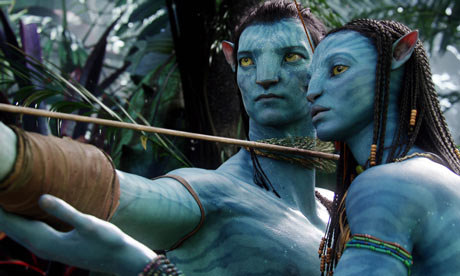
Nardi fell very strongly on the "participant" side of participant-observation; in fact, the way she described it made me think of the blockbuster movie "Avatar," where Marine Jake Sully doesn't fully understand or appreciate the Na'vi people until he is able to walk among them by way of his own "avatar." Just as Nardi walked among and lived as a member of the WoW community through her own avatar, Sully (eventually) walked and lived among the Na'vi as one of them- also by way of his avatar. The level of understanding that comes from experience is something that I don't think can be understated, particularly when it comes to cultural research. All of this is to say that Nardi has a strong foundation on which to deliver her findings.
Questions:
- Have you played World of Warcraft, or another similar game? If yes, what is the appeal to you? If no, why not? If you haven't played a game like this, what are your perceptions of WoW?
- Nardi mentions "online play" as a compliment to "offline activity." To what extent does this hold true, and how do you think it does act as a compliment?
- To what extent is WoW a culture all its own? What are some benefits that you see to participating in this culture?
Images:
Thursday, October 6, 2011
Networks
In the second part of Sherry Turkle's book, "Alone Together," Turkle shifts from a focus on robotic technologies toward a focus on the networked, online, plugged in, interconnected world that we all navigate throughout today. She makes some astute observations about shifts in how we relate to one another, what it means to be "together," and generally how technology affects our interpersonal relationships- or more specifically how it affects the way we approach our interpersonal relationships. Technology has been viewed as "just a tool," as she says (151) it was once seen as a way to navigate a complex "information environment"- a way to make our lives more organized and efficient. What technology- particularly communication technology- has done though, is bring an influx of new stimuli, new outlets, new ways to connect into our lives. We aren't more efficient because of technology- if anything we have more on our plate. We live our lives in different ways, we interact in different ways. Some of these things are good, and some of them are debatably not so good. Thanks to technology, we can be in touch with loved ones across the country without a second thought- but Turkle does a good job in pointing out various ways that technology might also be changing the way we approach our relationships with those same loved ones. Because these things hit so close to home, I am going to use my blog today to illustrate a couple of personal anecdotes that relate to some issues Turkle touches on.
On page 153, Turkle says "In the past, one waited for the sound of the post- by carriage, by foot, by truck. Now, when there is a lull, we check our e-mail, texts, and messages." The idea is that this "digital life" is a "place for hope"- hope for attention, for news, for connection, for interaction. I can relate to that idea, because I have gone through times in my life- perhaps when I am feeling distant from the people around me- that I check my cell phone for new text messages as though it were a nervous tick. There was a desire, a thirst, for some new form of communication; to interact with someone, somewhere. They didn't have to be across the table from me in the dining hall- I just needed to interact with someone I was comfortable with. This even carried on to the point that I would at times imagine I felt a "vibration" in my pocket- and drop everything within my attention span to scramble to see if I had gotten a text (only to find that I hadn't received anything after all.) This mania- the hope of constant connectivity, the desire or need to be constantly available, and the (somewhat shallow) belonging and interaction that comes across the digital mediums all create within me this almost obsessive pattern of behavior, and with it a mindset that values "any" communication over "quality" communication.
Another example that can illustrate the mindset that I can sometimes slip into, and that which I think Turkle is describing. My birthday was this week. With birthdays, everyone likes getting birthday wishes- greeting cards, a phone call, even just an encouraging "happy birthday" from day-to-day acquaintances. However, this year I found myself paying increased attention to another form of birthday greeting- the "obligatory Facebook birthday wall post." I have long thought that posting "Happy Birthday" on someone's Facebook wall was a cheap way to wish them happy birthday. Like much of digital interaction, it lessens the amount of thoughtfulness and time that goes into it. This year was a different story, though. I found myself waiting for a Facebook notification, sometimes I even caught myself more concerned about what people were saying to me on Facebook than who was around me physically at the time.
Immersed in our online lives, in some cases maniacally desiring to be connected- "plugged in"- at all times we probably don't realize what we are doing to ourselves. With all the good that comes from online life and connection, one of the concerns Turkle outlined was the need for true rest, solitude and retreat- which most in this connected world rarely get. We might even know we need a "break" or a "getaway" but suffer separation anxiety if we have to even think about turning our phones off for a minute. The other concern Turkle highlights well is the idea that our lives become "performances" in the same way that our online lives are performances. Even something as innocuous as Facebook requires some kind of "performance" because you want to make a good impression. With this demand to "be" somebody, there is a legitimate worry that we will lose the ability to be genuine with one another- already trained to perform and put on some sort of expected act.
This is all not to say that Turkle argues that all technology is bad- the main thing that it seems she is arguing is for an awareness of the demands technology places on us- specifically: we should be aware of what our technology does to us, as we become busier and more connected than ever before.
On page 153, Turkle says "In the past, one waited for the sound of the post- by carriage, by foot, by truck. Now, when there is a lull, we check our e-mail, texts, and messages." The idea is that this "digital life" is a "place for hope"- hope for attention, for news, for connection, for interaction. I can relate to that idea, because I have gone through times in my life- perhaps when I am feeling distant from the people around me- that I check my cell phone for new text messages as though it were a nervous tick. There was a desire, a thirst, for some new form of communication; to interact with someone, somewhere. They didn't have to be across the table from me in the dining hall- I just needed to interact with someone I was comfortable with. This even carried on to the point that I would at times imagine I felt a "vibration" in my pocket- and drop everything within my attention span to scramble to see if I had gotten a text (only to find that I hadn't received anything after all.) This mania- the hope of constant connectivity, the desire or need to be constantly available, and the (somewhat shallow) belonging and interaction that comes across the digital mediums all create within me this almost obsessive pattern of behavior, and with it a mindset that values "any" communication over "quality" communication.
Another example that can illustrate the mindset that I can sometimes slip into, and that which I think Turkle is describing. My birthday was this week. With birthdays, everyone likes getting birthday wishes- greeting cards, a phone call, even just an encouraging "happy birthday" from day-to-day acquaintances. However, this year I found myself paying increased attention to another form of birthday greeting- the "obligatory Facebook birthday wall post." I have long thought that posting "Happy Birthday" on someone's Facebook wall was a cheap way to wish them happy birthday. Like much of digital interaction, it lessens the amount of thoughtfulness and time that goes into it. This year was a different story, though. I found myself waiting for a Facebook notification, sometimes I even caught myself more concerned about what people were saying to me on Facebook than who was around me physically at the time.
Immersed in our online lives, in some cases maniacally desiring to be connected- "plugged in"- at all times we probably don't realize what we are doing to ourselves. With all the good that comes from online life and connection, one of the concerns Turkle outlined was the need for true rest, solitude and retreat- which most in this connected world rarely get. We might even know we need a "break" or a "getaway" but suffer separation anxiety if we have to even think about turning our phones off for a minute. The other concern Turkle highlights well is the idea that our lives become "performances" in the same way that our online lives are performances. Even something as innocuous as Facebook requires some kind of "performance" because you want to make a good impression. With this demand to "be" somebody, there is a legitimate worry that we will lose the ability to be genuine with one another- already trained to perform and put on some sort of expected act.
This is all not to say that Turkle argues that all technology is bad- the main thing that it seems she is arguing is for an awareness of the demands technology places on us- specifically: we should be aware of what our technology does to us, as we become busier and more connected than ever before.
Subscribe to:
Posts (Atom)